Showing posts with label TZ blu-ray. Show all posts

Friday, October 25, 2013

Episode Spotlight: "The Last Night of a Jockey" (10/25/1963)


Season 5, Episode 5 (125 overall)
Originally aired 10/25/1963
Cayuga Production # 2616


50 years ago tonight, a little man’s dream of being big came true.  No, this isn’t the Tom Hanks movie.


Rod Serling’s “The Last Night of a Jockey” introduces us to disgraced horse jockey Grady, where we find him brooding drunkenly in his apartment after being banned from racing for horse doping. He engages in a conversation with a mysterious “inner voice” who describes itself thusly:

I'm your memory, your conscience, Mr. Grady. I'm every one of your aspirations and recollections. I'm every one of your failures and defeats. I also wear the wreaths of all your victories. I'm what you call the Alter Ego. 

Later, it elaborates further:

I'm the fate every man makes for himself. You generally find me down at the bottom of the barrel. I'm the strength dredged up in desperation. I'm the last gasp. In some cases I'm something very good. In some cases, depending upon the person I'm representing, I can work miracles. I come with heroism, sacrifice, strength. And even better than that, I can epitomize everything noble in men. 

The Alter Ego offers to grant the diminutive Grady a single wish. Grady, who harbors a grudge against the universe for his slight stature, wishes to be big. He takes a nap (or, more likely, passes out) and, when he awakens, is delighted to discover that he’s suddenly eight feet tall. He then receives a call from the racing commission with the unexpected news that he’s been granted a second chance. He looks ahead to future glories on the track, until a crash of lightning interrupts his reverie. He’s now ten feet tall, rendering his return to racing impossible.


It’s evident that Grady’s Alter Ego is much more than a simple voice in his head; it appears to be some sort of celestial entity capable of modifying its target’s physical form at will. This entity is only masquerading as a voice inside Grady’s head as a means of communicating with him. But what exactly is said entity? I have a theory: call me crazy, but I believe Grady’s Alter Ego is none other than The Twilight Zone itself.


The Twilight Zone isn't an easy thing to define. Despite Rod Serling’s opening narrations, it’s not really a physical location that you can “cross over into.” It’s more conceptual, more abstract: sometimes it’s a state of mind, sometimes it’s a strange situation or circumstance, sometimes it’s a supernatural event. Like ice cream or toothpaste (or even vodka these days), it comes in many flavors. But if there’s one prevalent manifestation of this nebulous entity, it’s a device by which cosmic justice is dispensed, righting that which is wrong through unusual means.  We see it time and time again throughout the series’ run: innocent or luckless people are granted second chances, while the cruel and selfish are knocked for a loop befitting their misdeeds. Grady falls into the latter category: his reinstatement (which turns out to be an unattainable carrot after his supernatural growth spurt) is nothing if not comeuppance for his years of cheating.


Rod Serling’s “The Last Night of a Jockey” is a fascinating variation on his earlier “Nervous Man in a Four Dollar Room.” Both concern small, petty men, both of whom encounter alternate versions of themselves in mirrors. Both feature tour-de-force performances from their respective leads, and we get both ends of the retribution spectrum by comparing them: Joe Mantell’s likable but misguided Jackie Rhodes (the titular Nervous Man), receives The Twilight Zone’s patented second chance, while the coarse and hostile Grady is given the proverbial other end of the stick. While many of Serling’s contributions to the show’s fifth season are warmed-over retreads of earlier, better episodes, this is an unexpected (and quite welcome) exception; a Yang to a pre-existing Yin, if you will.

Yin and Yang... in The Twilight Zone.


In the late 80’s, CBS/Fox released a number of episodes on VHS, each volume containing two half-hour episodes (there were 22 of these tapes released, I believe). The episodes chosen for each volume often shared similar themes (“The Prime Mover” and “The Fever” are both set in Las Vegas; “Perchance to Dream” and “Shadow Play” involve nightmares; “The Last Flight” and “King Nine Will Not Return” concern military aircraft; etc.).  Neither “Nervous Man in a Four Dollar Room” or “The Last Night of a Jockey” found inclusion in these releases; however, they would’ve made a natural, quite complimentary pair.


“The Last Night of a Jockey,” which takes place entirely in Grady’s cramped studio apartment, has an effectively claustrophobic vibe (which intensifies as Grady’s size increases). The sight of the ten foot-tall Grady stomping around his (now tiny) apartment is an effectively surreal sequence (I’m reminded of Orson Welles engaging in a similar room-trashing tantrum in Citizen Kane). 


Presumably Mickey Rooney was chosen for this role because of his previous work as a horse jockey in 1944’s National Velvet, not to mention his 5’2” height. It’s certainly tempting to dock this episode a point for typecasting; however, Rooney’s performance more than transcends any surface relation to that earlier role (or potential stereotyping). He’s an absolute revelation here, alternately violently hostile and mournfully self-loathing as Grady, and at the same time articulate and smug as Grady’s Alter Ego.


“The Last Night of a Jockey” has the distinction of spawning one of the strangest DVD commentary tracks ever recorded. The track (which first appeared in the Definitive Edition DVD season five set, and was surprisingly carried forward to the blu-ray edition) features an argumentative and uncooperative Rooney repeatedly barking at an unnamed interviewer and exhibiting several bizarre behaviors. When asked for any memories he has about appearing in the episode, he answers “No, I don’t remember it. I don’t care anything about it!” When asked how he might explain the episode to younger viewers, Rooney replies as follows: “The younger audience doesn’t want to see this. They’re all watching sex and things!” There’s much more where that came from; trust me, it’s a surreal and frequently uncomfortable listen.  Wait, I wonder if he was in character as Grady when he recorded it…? If so, the man’s a goddamned genius.


“The Last Night of a Jockey” is a welcome comeback after last week’s flaccid offering, setting the bar back up where season five started out. Sadly, that bar won’t stay up there for long.


Next week: She’s the doll that does everything. She moves, she talks, she…. kills???


Friday, October 4, 2013

Episode Spotlight: "Steel" (10/04/1963)


Season 5, Episode 2 (122 overall)
Originally aired 10/04/1963
Cayuga Production # 2602


Ah, the old Man versus Machine bit.  We've seen it before (“A Thing about Machines”) and we’ll see it again (“The Brain Center at Whipple’s”) but, 50 years ago tonight, The Twilight Zone brought us a fresh take on the subject… with boxing gloves, no less.


Richard Matheson’s “Steel” (adapted from his own short story, as most of his TZ teleplays were) introduces us to Joe “Steel” Kelly, former heavyweight boxer (he earned the nickname by never getting knocked down) and his sidekick Pole, who have just rode into town for a three-round bout. But it’s not Steel who’s doing the fighting… it’s Battling Maxo, a model B2 automaton who’s seen better days (and several generations of newer models). This is 1974, you see, and human boxing has been outlawed.


As he is apparently prone to do, Maxo breaks a spring during his pre-fight check-over, rendering his arm useless.  The guys are broke, so they have no way to get the parts they need to fix him, so Steel comes up with a clever (albeit dangerous) plan… one that will place him in considerable jeopardy.


The robot boxers are an ingenious creation, and quite well realized. They look human enough at first glance, but their artificiality becomes quickly apparent upon closer examination: their expressionless faces look like sculpted rubber, and their eyes appear to be made of black glass. They look menacing and soulless, which is exactly what they should look like.


THE MUSIC


“Steel” features original music by Nathan Van Cleave, a welcome jazz score with a few avant-garde touches.  Of particular note is the “Test Run” cue, which plays during act one (when Steel and Pole are checking Maxo’s reflexes before the fight, time stamp 10:30).  Frenetic strings intertwine with warbling guitar notes for a minute-long aural smack upside the head. It’s a vivid and exciting piece, one that would've made a great Twilight Zone title theme (if that pesky Marius Constant theme wasn’t so deeply ingrained in the collective consciousness, that is). Have a listen:


As with all season five scores, Van Cleave’s “Steel” has never been released (no vinyl, no tape, no CD, no mp3, no nothin’), but it can be found, isolated for your listening pleasure, on both the Definitive DVD and blu-ray release of season five from Image Entertainment.  I wish the same could be said of Van Cleave’s other jazz score from season five (“Black Leather Jackets”), which is NOT isolated on the season five sets and continues to be maddeningly unattainable in any form.


Rock ‘Em Sock ‘Em Robots first appeared in 1964, the year after “Steel” first aired. I can’t help but wonder if the toy’s designer, Marvin Glass (no, it wasn’t Horace Ford, smart ass) saw this episode, came up with (or, y’now, outright stole) the idea and immediately starting producing them.


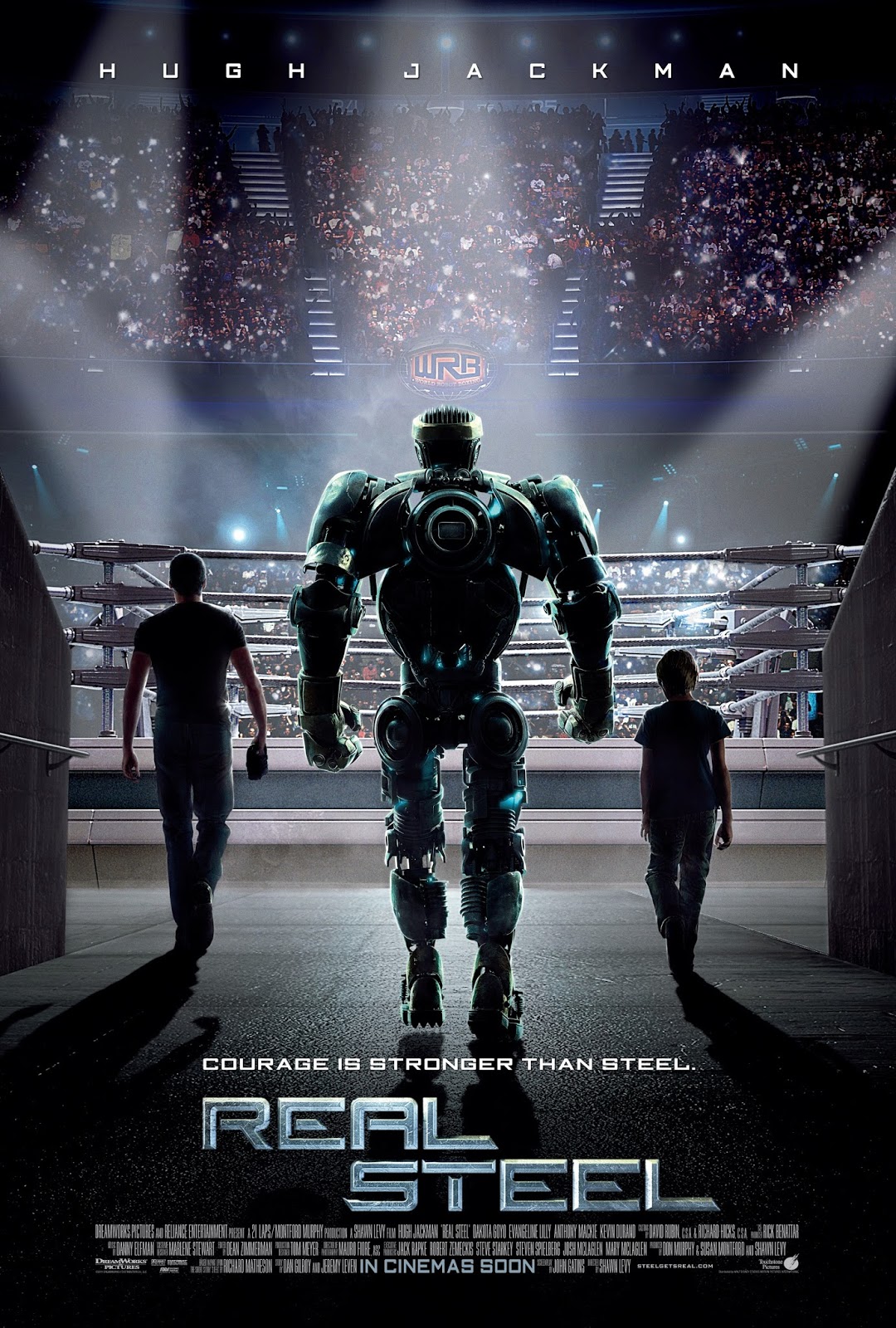
2011’s Real Steel, on the other hand, didn't rip off Matheson’s idea, as he actually has a writing credit in the film. I haven’t seen it, so I can’t really comment. It’s got big robots and Hugh Jackman, so how bad can it be?  


FAMILIAR FACES


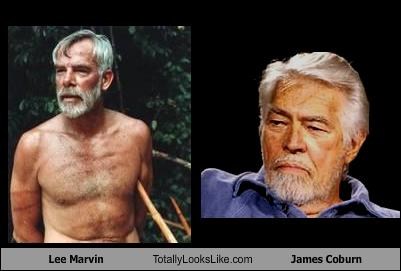
Lee Marvin, last seen in season three’s “The Grave,” is excellent as the mono-minded Steel Kelly (but really, he’s excellent in almost everything he ever did). For some reason I was thinking he also starred in the upcoming episode “The Old Man in the Cave,” but that’s actually James Coburn. Jesus, what the hell is wrong with me? Take this as an indicator that my season five memories are very fuzzy.


Ah ha!  I’m not the only one who’s made this mistake!


Joe Mantell stops by The Twilight Zone for another visit (he was marvelous in season two’s “Nervous Man in a Four Dollar Room”). Pole is pretty cardboard as written, but Mantell makes him breathe. Pole is generally argumentative and negative, but witness the fear in his eyes when he somberly predicts the outcome of the bout: “Steel, you’ll be killed.” He’s pre-grieving, and it’s very effective.


As The Maynard Flash, Chuck Hicks is convincingly soulless and mechanistic. We’ll see Hicks again in an uncredited role as an unnamed furniture mover later this season in “Ninety Years without Slumbering.” Apparently this particular B7 was able to find work when he was supplanted by later B models (I’m reminded of Mountain McClintock from Serling’s Requiem for a Heavyweight, in which an over-the-hill boxer seeks work through the Employment Office).


Two more TZ vets to mention:  Nolan is played by Merritt Bohn, who was also the truck driver in season one’s “One for the Angels” (you know, the one who runs over poor Dana Dillaway). Maxwell is played by Frank London, who was also the truck driver in season two’s “A Penny for Your Thoughts” (you know, the one who almost runs over Dick York).  I imagine these guys were good buddies with Dave Armstrong, who was equally dangerous behind the wheel on this show.


And speaking of familiar faces, what's the deal with the screaming guy in the crowd? He looks a lot like the star of next week's episode....

    Shatner.                        Not Shatner.


“Steel” is definitely upper-tier TZ which, as season five trudges forward, will become an increasingly rare thing to behold.  It’s tight and toned and sturdy on its feet… in other words, no oil paste or replacement springs needed here.


Next week: Captain Kirk sees a Mugato on the Enterprise’s port nacelle and totally loses his shit.


Wednesday, July 10, 2013

Special Report: "The Time Element"


We all know that The Twilight Zone debuted in 1959 with “Where Is Everybody?” However, if Rod Serling had had his way, the series would have premiered two years earlier as an hour show with an entirely different pilot. In 1957, he submitted a teleplay entitled “The Time Element” to CBS, hoping to launch the series.  CBS didn't bite on the series idea, but they did buy the script… but didn't produce it. It was finally produced by Westinghouse’s Desilu Playhouse and was broadcast on 11/24/1958 to surprise acclaim, leading CBS to realize that hey, maybe Serling’s kooky series idea might have legs after all. A little less than a year later, The Twilight Zone as we know it premiered.


“The Time Element” was something of a collector’s Holy Grail until 1996, when it was aired as part of the launch of Nickelodeon’s TV Land network. I eagerly videotaped it, but somehow misplaced it (or, more likely, unwittingly taped over it). Several years later (let’s say 2007 or so), I obtained a DVD-R copy of that same TV Land broadcast in a trade. Bootlegs and home-taped copies were finally rendered ob-so-lete when Image Entertainment included “The Time Element” in their Twilight Zone: Season 1 blu-ray set in 2010 (in glorious high definition, no less!), finally making it easy to acquire for TZ-obsessives like yours truly.


SPOILER ALERT!  Yeah, I’m gonna give the whole thing away. “The Time Element” concerns one Peter Jenson, who is visiting the office of psychiatrist Gillespie with an odd problem:  he’s been having the same recurring dream every night for the past week. In his dream (which are conveyed to us via flashback scenes), he wakes up with a hangover in a Honolulu hotel room on December 6, 1941.  At first he assumes that some elaborate gag is being played on him (don’t they always?), but gradually comes to accept that he is indeed back in time… the day before the Japanese attack on Pearl Harbor, of all days. He hits the bar for a drink (he does a lot of drinking throughout, actually) and makes the acquaintance of the Janoskis, a young naval ensign and his new bride.  


What does he do next? In his own words: “I spent the next two-and-a-half hours in a kind of paradise, making bets on sure things. Every race, every prize fight, every football game I could remember happening after December of 1941.  I got it figured it out that if this crazy stuff goes on at least six more months, I’m a shoo-in to collect about $464,000.00 from half a dozen soon-to-be impoverished bookies. I don’t have one idea what I’m doing back here, but as long as I’m back I figure I’ll put it all to good use.”  Yup, that’s what he does first.  It won’t occur to him until later that maybe he should alert somebody to tomorrow’s attack. It’s about here that I went from finding Jenson merely annoying to actively hating him.

When Jenson finally decides to make a concerted effort to warn somebody, he chooses the editor of the local newspaper, which is just plain moronic.  What newspaper editor is going to splash such a crazy story across the evening edition with virtually nothing to go on but the ravings of a boorish lout?  Jenson’s idiocy doesn't stop there.  He’s now accepted that he really is back in time (dream or not), yet he can’t fathom why the people around him don’t know that Harry S. Truman will assume the presidency when FDR dies… in their future, which of course they wouldn't have knowledge of.  He then launches into the following: “You guys know what a Sputnik is?  Rock and roll?  A jet stream? Rocky Marciano? Atomic subs? The Los Angeles Dodgers?”  Newspaper reporter Hannify observes moments later that “there’s nothing insane about that man.”  Maybe not, but he’s certainly a stone cold moron.


Speaking of Hannify, there’s a bizarre bit of business in the very next scene: a doctor (who evidently makes house calls to newspaper offices) discovers a drawing that Hannify has made (while listening to Jenson’s story) of a Japanese plane dropping a bomb on an aircraft carrier. “They’re just doodles,” says Hannify nervously. “You’d better watch yourself or I’ll be putting you under a light,” smiles the doctor ominously.  Hannify smiles queasily and leaves the room, leaving the doctor to crumple the drawing and drop it into a wastebasket with a hostile look on his face.  It’s an enigmatic moment implying conspiracy and intrigue (which frankly might’ve led to something interesting), but it never goes anywhere.


The third act opens with more narration from Jenson: “The best laid plans of mice and men, and Peter Jenson (a line Serling would reuse, substituting Henry Bemis’ name, in TZ’s “Time Enough at Last”). I just struck a blow for law and order and missed. So what’s left to do?  Simple: nothin’. Just sit in a bar feeling that kind of sweet, sad glow that comes with realizing that most people aren't as bright as you are” (so he IS delusional after all, it seems).  He rants and raves at length (he even sings songs about Pearl Harbor that haven’t been written yet!), at which point the hotel patrons finally get fed up with his antics (he ends up getting decked by both Janoski and the bartender in the same scene!).  He slumps unconscious against the bar’s jukebox, and wakes up the next morning back in his hotel room.  He hears the sound of approaching planes and looks fearfully out the window.  Several Japanese aircraft are closing in, and it is here that the dream abruptly ends.


Dr. Gillespie tries to explain the nature of dreams to Jenson, and to assure him that he wasn’t really back in time.  Jenson tells him that he managed to track down Janoski’s mother, who told him that her son and his new bride were killed at Pearl Harbor, proving that they aren't just imagined dream figures, and that he really is traveling backward in time every night. 


Jenson then falls asleep on the couch, at which point we are treated to a montage of scenes that we've already seen (representing that he is having the usual dream, which is just blatant padding; admittedly, the visual device used is kinda cool, but still). However, this time the dream has a bit more at the end:  Jenson is riddled with bullets from the attacking planes, and he falls dead to the floor.


Gillespie finds himself sitting alone in his office.  He is disturbed by something, but isn't sure what it is.  He flips open his secretary’s appointment book, which pointedly indicates that he has no patients today.  He goes to a local bar and sees a photograph of Jenson.  The bartender tells him that Jenson used to tend bar there, but he was killed… yup, you guessed it, at Pearl Fucking Harbor.


Okay, seriously, what the hell?  What was the point of all this?  So we have a guy who travels back in time every night for an entire week (how this is accomplished is never explained), for the express purpose of…. well, dying earlier than he otherwise would have, an alteration of history hat apparently results in no perceptible effect on said history (no ripple effect here to be found here, folks). Now, I’m fine with time paradoxes, and I don’t always need things to make perfect sense (I really enjoyed last year’s Looper, for example), but this is just bullshit.  We've just spent an hour watching what amounts to absolutely nothing, which I could at least accept if the hour had been enjoyable. No such luck.


Ugh. Anyway, after the shocking ending (“shocking” in this case being a synonym for “stupid and insulting”), we’re treated to a few minutes of host Desi Arnaz Jr. offering his own “rational” explanation for the incongruous events we've just witnessed, after which he proceeds to hawk a new Westinghouse refrigerator and banter briefly with wife Lucille Ball. Easily the hour’s most entertaining five minutes.


While “The Time Element” doesn't really feel like a Twilight Zone episode, it does contain a number of, er, elements that would pop up on the series: we have a man traveling through time with warnings of imminent disaster (“No Time like the Past”), flashbacks framed within a psychiatric evaluation (“Perchance to Dream”), the use of supernatural gifts for financial gain through gambling (“A Most Unusual Camera,” “The Prime Mover”), and of course unnatural character dialogue (as is the case in most of Serling’s 91 TZ scripts).  Unfortunately, familiarity doesn't equate to quality: it’s as if all the pieces are there but the center is missing, which unfortunately wrecks the whole thing (I’m reminded of a Hostess cupcake I had many years ago which inexplicably had no cream filling).  Further, “The Time Element” is stagey, visually unimaginative, and way too long (interestingly, Serling’s original script was 30 minutes long, but he expanded it to an hour before submitting it to CBS; sound familiar, season 4?). It’s laboriously slow, almost to the point of bludgeoning its audience every time a new piece of information surfaces.


But the single worst part of “The Time Element” has got to be William Bendix, in the lead as Peter Jenson.  I’ve never been a fan, but I've never found him quite as offensive as he is here (which is due, in part I suppose, to Serling’s script). Jenson is an obnoxious bully (he threatens three different people with violence with little to no provocation, and is constantly berating and belittling everyone he speaks to). Why he’s experiencing his apparent time-traveling is anybody’s guess but, no matter what the reason is, it’s impossible to sympathize with his plight or care about his fate.


Dr. Gillespie is played by Martin Balsam, a warm and beloved TZ face (“The Sixteen Millimeter Shrine,” “The New Exhibit”) who may be best remembered as Norman/Norma Bates’ second victim (well, second onscreen victim anyway) in Alfred Hitchcock’s 1962 chiller Psycho.


Hannify, the newspaper reporter, is essayed by Don Keefer, whom we all know and love from his role as Dan Hollis in season three’s “It’s A Good Life.” We also saw him recently in “Passage on the Lady Anne,” and we’ll see him again in season five’s “From Agnes, With Love.”


“The Time Element” features two bartenders in two different time periods, and both are TZ veterans. The bartender in 1941 (who has the pleasure of knocking Jenson out) is played by Jesse White (“Cavender Is Coming,” “Once Upon a Time”), and the 1958 bartender is played by Paul Bryar (“And When the Sky Was Opened,” “He’s Alive”).


Carolyn Kearney is fresh and sparkly as new bride Mrs. Janoski, and if this were a true Twilight Zone episode, she’d be an automatic TZ Babe. We’ll see her again in season five’s “Ninety Years without Slumbering” (which I guess qualifies her after all!). Her husband, the J. Crew catalog-ready Ensign Janoski, is played by Darryl Hickman, who never appeared on The Twilight Zone but did pop up on Alfred Hitchcock Presents (“Heart of Gold”).


The newspaper editor, Mr. Gibbons, is played by Bartlett Robinson (“Back There,” “To Serve Man”). Alan Baxter, who plays the inappropriately conspiratorial doctor, never appeared on The Twilight Zone, but he did pop up on The Outer Limits (in the appropriately conspiratorial “O.B.I.T.”).


I wrote a teleplay my freshman year of high school called “Circa 1975,” concerning a lowly drunk who inexplicably wakes up eleven years in his own past and seizes the opportunity to stop his (then) fiance from dying in a car accident, thereby changing the downward course of his life.  It was my first attempt (of many, actually) to write a TZ-type script (I’d just discovered the series a couple of years earlier). I wouldn't see “The Time Element” for over a decade; however, both the core story and the lead character (who is quite similar to the boorish Jenson) are quite similar.  And hey, not to toot my own horn or anything, but my story had the courtesy to provide a reason for the time travel, and featured a happy ending to boot.  Interestingly, my story also included lots of uncomfortably awkward dialogue, so maybe I was more like Serling than I thought.


Somewhere deep in the recesses of my storage unit are three 27 year-old Super 8 film cartridges, exposed but never developed, mummified in their original boxes with masking tape.  On these cartridges is silent footage from 1986 (shot by me) of my friends (Donovan Littlejohn and David Beeson; ‘sup fellas?) acting out scenes from “Circa 1975” as a test for an ambitious student film project called The Kaleidoscope (a TZ knockoff which never materialized). Apparently the chemicals needed to process Kodachrome film are no longer made (the format was pronounced dead in 2010), so I guess the footage will never be seen.


In the final analysis (well, mine anyway), “The Time Element” is little more than a historical curiosity. I can appreciate its existence, since my favorite TV series of all time probably wouldn't have existed without it, but I sure as hell don’t like it. It’s uninvolving, abrasive and ultimately pointless. Had Jenson somehow saved the young Janoski couple through his time traveling (and subsequent death), there would have been a cosmic reason behind the proceedings, and his character could have been at least partially redeemed in the process. As written and presented, however, “The Time Element” lacks a corresponding human element that just might have saved it.