Showing posts with label TZ Soundtracks. Show all posts

Friday, December 24, 2021

4x15 "The Changing of the Gart"


The end. 


Get Dr. Reba Wissner’s essential A Dimension of Sound: Music in The Twilight Zone here: 

 
Glenn Tolle’s blog post on Horace Man: 


Get Night Gallery Season 1 on Blu-ray here: 


Theme: “Neither Here nor There” performed by Twin Loops 


“You’re a Mean One, Mr. Grinch” performed by Thurl Ravenscroft (from the album How the Grinch Stole Christmas: The Original TV Soundtrack, copyright 1966 by MGM Records) 


“Snowfall” performed by the Jackie Gleason & His Orchestra (from the album Merry Christmas, copyright 1956 by Capitol Records) 


“Midnight Sun” performed by Duran Duran (from the album Medazzaland, copyright 1997 by EMI/Capital Records) 


The Twilight Zone is a trademark of CBS, Inc. 

 
Between Light and Shadow: A Twilight Zone Podcast is a nonprofit podcast. Music clips and dialogue excerpts used herein are the property of their respective copyright owners; we claim no ownership of these materials. Their use is strictly for illustrative purposes and should be considered Fair Use as stated in the Copyright Act of 1976, 17 U.S.C. section 107.  

Sunday, August 27, 2017

2x09 Special Report: The Jazz Stylings of Jerry Goldsmith


This week Craig lets the music do the talking as we explore composer Jerry Goldsmith’s musical contributions to The Twilight Zone’s musical landscape, specifically his jazz compositions. You’ll want a drink or two for this one… three fingers of your best bourbon, or maybe a dirty martini with three olives. Cheers, mates.

The Twilight Zone is a trademark of CBS, Inc.

Between Light and a Shadow: A Twilight Zone Podcast is a nonprofit podcast. Music clips and dialogue excerpts used herein are the property of their respective copyright owners; we claim no ownership of these materials. Their use is strictly for illustrative purposes and should be considered Fair Use as stated in the Copyright Act of 1976, 17 U.S.C. section 107. 

Wednesday, October 12, 2011

TZ car CD (October 2011)


I’ve mentioned a couple of times lately that I keep a homemade Twilight Zone soundtrack CD in my car at all times. I redo it a few times per year, changing the lineup each time. I just finished the latest incarnation yesterday, so I thought I’d share the contents. I’ll probably post the tracks for future revisions as they occur.


01. The Lonely (selections) (Bernard Herrmann) (08:36)
  • Twilight Zone theme (first revision)
  • Intro
  • The Waiting
  • Alicia
  • Eleven Months
  • The Stars
  • Finale
02. The Big Tall Wish (Jerry Goldsmith) (11:56)

03. The Outer Space Suite: Prelude (Bernard Herrmann) (3:55)
04. The Outer Space Suite: Space Drift (Bernard Herrmann) (3:18)
05. The Outer Space Suite: Time Suspense (Bernard Herrmann) (4:27)
06. The Outer Space Suite: Starlight (Bernard Herrmann) (2:55)
07. The Outer Space Suite: Moonscape (Bernard Herrmann) (2:30)
08. The Outer Space Suite: Tycho (Bernard Herrmann) (2:03)

09. Two (Leonard Rosenman) (12:13)

10. The Passersby (Fred Steiner) (13:02)

11. Walking Distance (Bernard Herrmann) (12:32)

12. Where Is Everybody? (Finale; edit)/End Title Theme (Bernard Herrmann) (01:42)


Herrmann's Outer Space Suite is one of several he composed for the CBS Music Library, which provided the stock music for all TZ episodes lacking an original score. Several of the Outer Space cues were used quite extensively on the show.

*Sigh* That reminds me... I've gotta start working on my epic (okay, maybe not quite epic) spotlight of the show's musical identity. I meant to do it over the summer, but... well, you know, I got sidetracked. I need to at least spotlight Bernard Herrmann soon, before the end of the year (he turned 100 in June).


Thursday, October 6, 2011

TZ Promo: "The Passersby" (10/06/1961)


Season 3, Episode 4 (#69 overall)
Cayuga Production # 4817

I first discovered The Twilight Zone in middle school, at the tender of age of 13, and by the age of 21, I’d seen every single episode at least once. Some episodes I’ve seen dozens of times over the two decades since, but there are others that I haven’t seen in 20 years or more. When I started this 5-year celebration of the series’ 50th anniversary, one of the things that excited me was the prospect of seeing those lesser-viewed episodes with older eyes. Perhaps I’d discover a gem that I’d foolishly shunned in my youth. This possibility, frankly, excited me more than simply rewatching episodes that I already knew by heart.

It’s happened. I've discovered that hidden gem.


I saw “The Passersby” once and only once, back in high school when I home-videotaped most of the series. In my teenage estimation, the episode was boring and slow. Worse, the “surprise” ending was obvious from the beginning. I chalked it up as one of Serling’s missteps, certainly not as offensive as “Mr. Bevis” or “Mr. Dingle, the Strong,” but a stinker nonetheless. I might have never watched it again, were I not endeavoring to watch every episode on its 50th birthday.

I’m not a religious man, but thank god this wasn’t the case. “The Passersby” is truly remarkable, and the next time I revise my favorites list, it will most definitely be added.


Written by Rod Serling and directed by Elliot Silverstein, “The Passersby” takes place in the aftermath of The Civil War. A woman, Lavinia Godwin, sits on the porch of her house, which is in an advanced state of disrepair. She watches an endless stream of soldiers from both sides of the conflict lumber past in a smoky haze. One of them stops and asks for water. They talk. He plays his battered guitar.


A few other men stop by, including Lavinia's lost (and presumed killed) husband. Each interaction contributes to a dawning realization that all of them are in fact dead. Lavinia refuses to believe it, despite the mounting evidence. The stream of bodies dries up, save for one final passerby: Abraham Lincoln himself, newly assassinated, who stops to comfort her.


I normally eschew this level of spoilery, but the truth is pretty apparent from the opening moments. The soldiers, bathed in fog, are clearly the walking dead, and we're given several clues that support this truth. It does seem to take the main players a long time to deduce the obvious, but personally, I don’t think the ultimate truth is the point of the story. What we’re seeing is a meditation on the mind’s hesitation to accept a fundamental shift in the very nature of its existence. Wouldn't we need a lot of convincing, were this happening to us? We see this reluctance to let go of earthly reality at the core of the brilliant and visceral 1990 film Jacob's Ladder (a favorite of mine). Here in the Zone, season one’s “The Hitch-hiker” explored this same concept, as will the upcoming “Nothing in the Dark," but neither achieves the haunting grandeur of “The Passersby.” You can't argue with the episode's production design, either.... it's just damned gorgeous to look at.


Marc Scott Zicree, in his Twilight Zone Companion, dismisses “The Passersby” as “one of the weakest episodes of the first three seasons.” What a numbskull.

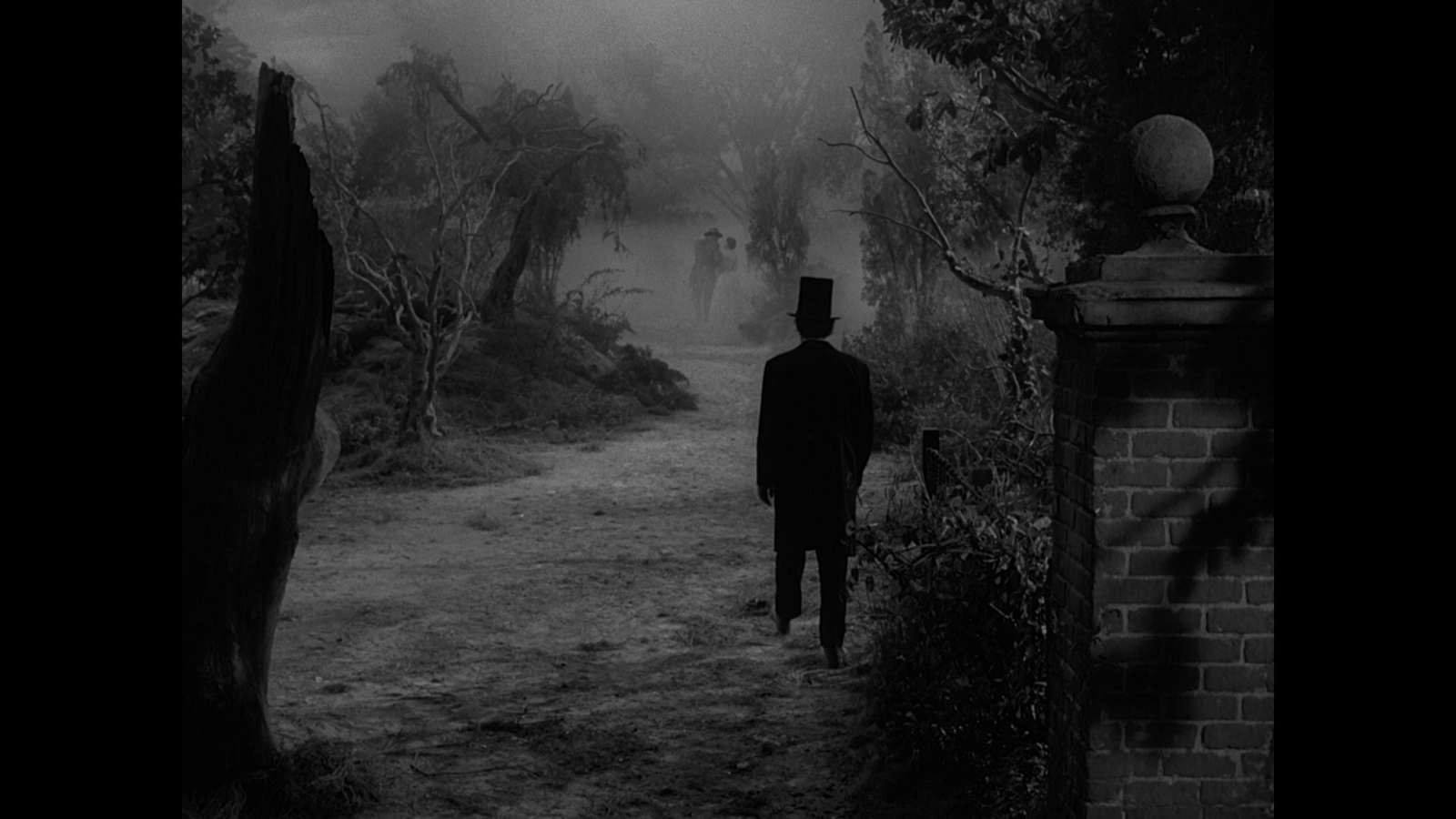
"The Passersby" features what must be the most beautiful closing shot in the entire series. Lavinia races down the fog-shrouded road to catch up with her deceased husband. Lincoln slowly follows. No more casualties of The Civil War shall pass here. Absolutely breathtaking.


THE MUSIC

“The Passersby” features one of the greatest original scores ever composed for The Twilight Zone. Fred Steiner’s music (heavy on the violins and harp) is beautiful and somber, mournful but ultimately hopeful. It rises slowly, almost liquidly (is that a word? It should be), growing in intensity like waves on a restless sea. It perfectly underlines the languid pace of the episode and, on its own, divorced from the visuals, is a moving and haunting listening experience.


Steiner's score has been made available many times. It was first released on vinyl in 1985 by Varese Sarabande (The Twilight Zone: The Original Television Scores, Volume 5). Varese Sarabande only released CD versions of their five LPs in Japan; in the US, they released two “Best of” CD compilations in 1990 (“The Passersby” was included on the second volume), which are both out of print. The score appeared on domestic CD again as part of Silva’s Twilight Zone 40th Anniversary boxed set in 1999, which is now out of print. I just checked iTunes, and it's not there. So the only way to get it is to buy either the Season 3 Definitive Edition DVD or the more recent blu-ray edition (both from Image Entertainment), both of which feature the score isolated on alternate music-only tracks. I happen to own all of the above items, so I’m planning on listening to the score tonight before I watch the episode… on vinyl, in a darkened room. Maybe with a glass of wine, or perhaps scotch.


A few weeks back, I mentioned that I keep a CD-R of favorite TZ music in my car at all times, and that I frequently revise it. I've been doing this for several years, and “The Passersby” has never once been rotated out.


REMAKES, KINDA SORTA


The 2001 film The Others (starring Nicole Kidman) seems to be a semi-remake of this episode (though it takes place in the aftermath of WWII, not the Civil War). It's a great film (it was recently released on blu-ray... I need to pick it up). The 2002-2003 UPN Twilight Zone revival spawned a semi-remake called “Homecoming,” which moved the action into the present, during the War in Iraq (I can’t comment on it, since I’ve never seen it, but what I have seen of the UPN series leaves me less than optimistic).


RANDOM HILARITY
16 minutes and 10 seconds into the episode, a fly lands on James Gregory’s right suspender strap and nonchalantly crawls down his torso. I guess the little guy died in The Civil War too. I'm imagining a prequel story in which the fly is Gregory's ersatz Jiminy Cricket, keeping him on the straight and narrow while he navigates his way through the horrors of war.... hey, it couldn't be worse than George Lucas's ill-conceived prequels, right?


This is the kind of stuff you can’t get with VHS or DVD, folks. Only the pristine clarity of high definition can reveal delightful little details like this. Invest in the blu-rays. C'mon, take the damn plunge already. I’m gonna keep harping on you till you do.


Next week: TZ veteran Jack Klugman challenges Jonathan Winters to a deadly game of… pool?


Thursday, September 15, 2011

TZ Promo: “Two” (9/15/1961)


Season 3, Episode 1 (#66 overall)
Cayuga Production # 4802

Fifty years ago tonight, The Twilight Zone returned for its third season. In keeping with tradition, the season premiere features a solitary figure wandering around trying to make sense of the environment they find themselves in. This time, however, our solitary figure is a woman. And as she quickly discovers, she’s not so solitary after all.


“Two,” written and directed by Montgomery Pittman, stars the lovely Elizabeth Montgomery (of Bewitched fame) as a nameless military officer of indeterminate rank, exploring the ruins of a bombed-out city, scrounging for food. The script never specifies, but we’re given sufficient clues to deduce that she’s from the invading army, and that said army is Russian. Serling remarks that “the signposts are in English so that we may read them more easily,” but what else would they be? The city is pretty obviously American. The episode premiered in 1961, when the cold war was in full swing, so our fictional enemies are pretty clearly intended to represent the US and the USSR. The intent is made doubly clear when the woman finally speaks, and her language is… you guessed it, Russian.

Speaking English, meanwhile, is another unnamed soldier, this one played by Charles Bronson (of big 70’s mustache fame), and he speaks plenty. He’s a pacifist, he’s weary of all the fighting, and he’s a member of the presumably defeated (American) side. Actually, maybe neither side won. Serling tells us that “it’s been five years since a human being walked these streets,” and that “this is the first day of the sixth year, as man used to measure time.” Sounds like worldwide destruction to me. For all we know, these two are the last two surviving people on the whole planet. Serling confirms this in the “next week on The Twilight Zone” promo that aired (or maybe didn’t, see below) the week before this episode premiered, in which he states that the couple in question are “left alone on an otherwise uninhabited earth.”


Which begs the question: Is this that hoary old Adam and Eve parable, rearing its clichĂ©d head? Well, sure, why not? A clichĂ©d story works if it’s told well. TZ will crack this particular literary chestnut again in season 5, but less effectively (and more obviously). Yes, I’m talking to you, “Probe 7, Over and Out.”

You thinkin' what I'm thinkin', baby? Furlough Romance, indeed.

As it stands, “Two” is a pretty good, but not necessarily great, Twilight Zone offering. There’s really no supernatural or science fiction element to it (except the nuclear war aftermath angle, which is pretty thin, but we’re also witnessing future events, so maybe the two combined is enough to push it past the reality line…? I dunno), but the conflicted tension between the characters is engaging. Oh, and Liz Montgomery is a tasty morsel, even under all that grime. She --- along with the rest of the episode --- looks stunning in high-def. Bronson is fine in his role, but Montgomery walks off with the whole damn episode, and she only has a single word of dialogue. Alternatively childlike and deadly, she's miles away from the perky domestic Bewitch she's remembered best for (coincidentally, we've already seen a similar mime-centric performance in season two's "The Invaders" from Agnes Moorehead, who played Montgomery's mother on Bewitched).

Precrassny. *Sigh*

THE MUSIC

Nathan Van Cleave contributes original music, moody and a bit melodramatic, with effective militaristic touches via the trumpet and tympani. It’s one of my favorite TZ scores, and was first released on Varese Sarabande’s The Twilight Zone: The Original Television Scores, Volume 4 LP (and CD in Japan), and later appeared on Silva’s The Twilight Zone 40th Anniversary 4-CD set. The score is also presented in isolated form (on an alternate audio track) on Image Entertainment’s The Twilight Zone, Season 2: The Definitive Edition DVD, as well as the more recent blu-ray edition, for your listening pleasure.


I keep a CD-R of my favorite TZ scores in the car at all times. I usually revise it a couple of times per year, adding and subtracting stuff depending on my ever-changing musical whims. However, Van Cleave’s “Two” never gets rotated out, along with Bernard Herrmann’s “Walking Distance” and Fred Steiner’s “The Passersby.”


RANDOM HILARITY

Early on in the episode, Montgomery's character explores an abandoned restaurant. She discovers a lone can of "Forever Seal" pre-cooked chicken drumsticks. As she pulls it from the shelf, she spies a painfully fake tarantula on a nearby counter. With minimal reaction, she slams the can down on it. This strikes me as a bit odd... after six years of isolation, I'd probably be keeping that thing as a pet.


Splat!


THAT PROMO SHOULDN’T EXIST, BUT IT DOES…

Each Twilight Zone episode ends with a brief clip in which Rod Serling plugs the following week’s show, just a quick glance at what’s coming up next (I mimic this approach here in my episode spotlights; the Serling shots I use come from said promos). The promos were (presumably) omitted entirely during the summertime, since the episodes were never reran in the same order that they were originally aired (this is also why the promos aren’t included in syndication packages). This omission extended to repeats aired in mid-season; if a repeat was shown, there would typically be no promo for the new episode that would follow it. This included season premieres; however, Image Entertainment’s blu-ray of season three includes a promo for “Two” as a supplemental feature. Since “Two” was the season premiere, and was therefore preceded by a repeat, how can this be?


I can only speculate, but it’s probable that Cayuga had commenced production on season 3 with no clear idea which episode would open it. Therefore, they would’ve shot promos for every episode, “Two” included. The promo’s inclusion on the blu-ray in no way implies that it was ever actually aired, since it was preceded by the repeat of season one’s “A World of His Own”… but who knows? It’s nice to have either way. Thanks to Scott Stevenson for bringing this to my attention in time for this entry!

As long as we’re talking about promos, one (obviously) didn’t exist for the pilot episode “Where Is Everybody?” back in 1959. When it was repeated directly after the season two closer “The Obsolete Man” in 1961, a new promo was shot. To my knowledge, it was the only episode to be graced with a promo after the fact. This promo appears on Image Entertainment’s season two blu-ray.

Another promo tidbit: although not present on Image Entertainment’s blu-ray for season five, a promo for “In Praise of Pip” (that season’s premiere) is discussed at length in Martin Grams Jr,’s The Twilight Zone: Unlocking the Door to a Television Classic (turn to page 606, students), and it sounds like it was definitely aired (with a repeat of season four’s “The Thirty Fathom Grave”). So maybe I’m completely wrong, and promos were in fact shot AND AIRED for season two’s premiere “King Nine Will Not Return,” season four’s premiere “In His Image,” and yes, season three’s “Two.” For all I know, the promos were aired all throughout the repeat seasons too, and everything I said three paragraphs up is completely wrong. Hell, I dunno. Thanks again to Scott Stevenson, for challenging my notions and making my head hurt.


Next week: A commercial airliner lands on schedule, with one big problem: it’s completely empty. Whaaaaaaat?


Thursday, January 13, 2011

TZ Promo: “Back There” (1/13/1961)


“Back There”
Season Two, Episode 13 (#49 overall)
Cayuga Production # 173-3648


♪ The professor and Mary Ann ♪.... oh wait, wrong theme song. Ahem. 50 years ago tonight, the man best remembered as the Professor on Gilligan's Island found himself in the past, and compelled to change history.


Russell Johnson stars as Peter Corrigan in Rod Serling's "Back There," directed by David Orrick McDearmon. The plot is really easy to encapsulate. Guy finds himself inexplicably in the past, tries to prevent Lincoln's assassination, instead gets c-blocked by John Wilkes Booth. Fail.


"Back There" has all the makings of a good episode... however, two things stand in its way: first, there's not much in the way of actual tension. The Twilight Zone requires the viewer to suspend its disbelief... up to a point. Some things are just too much to ask. We know Corrigan won't be able to stop Lincoln's assassination, so the whole affair is ultimately pointless. Second, as much as I like Russell Johnson (he was great in season one's "Execution"), he totally overacts here.


The best thing about the episode is Jerry Goldsmith's haunting, harpsichord-tinged score. The more recognizable cues will be reused later, to great effect, in season three's "To Serve Man" and season four's "Death Ship." The score was first released on Varese Sarabande’s The Twilight Zone: The Original Television Scores, Volume 3 LP (and CD in Japan), and later appeared on Silva’s The Twilight Zone 40th Anniversary Collection. It’s also presented in isolated form (on an alternate audio track) on Image Entertainment’s The Twilight Zone, Season 2: The Definitive Edition DVD, and on the recently-released blu-ray edition as well.


* The Professor, incidentally, did have a name... it was Roy Hinkley. How many of you knew that?


Next week: another videotaped episode. Unfortunately, it's the worst of the bunch. It stinks like a cheap used car.


Thursday, January 6, 2011

TZ Promo: "Dust" (1/06/1961)


“Dust”
Season Two, Episode 12 (#48 overall)
Cayuga Production # 173-3653

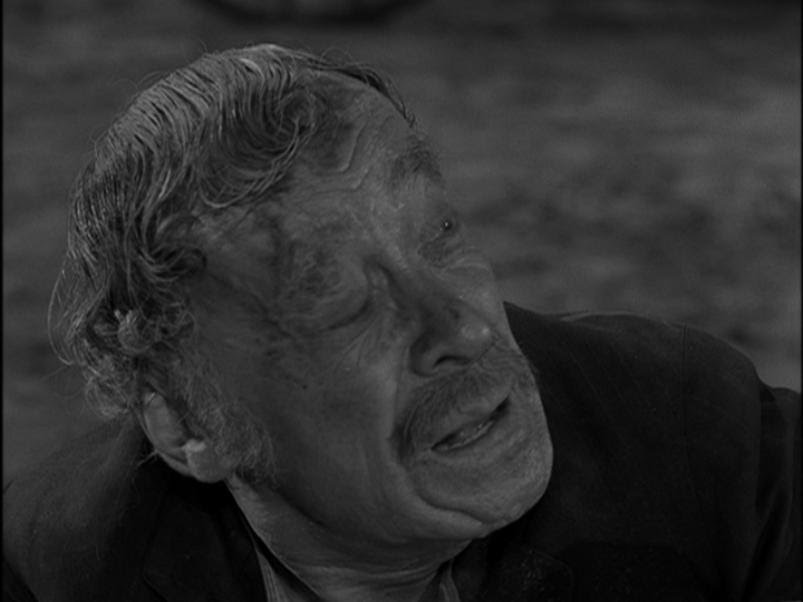
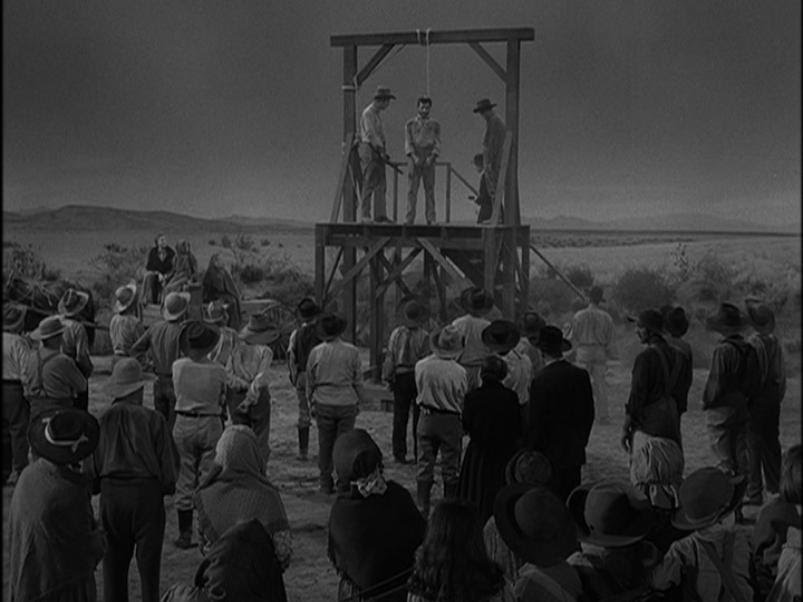
In a remote desert town in the Old West, a young Hispanic man is set to hang for accidentally killing a child. He waits in his cell, staring helplessly out the window as his gallows are readied. A grimy peddler named Sykes skulks around, offering to sell a pouch of magic dust that just might turn things around for all concerned.

Sounds like some twisted western noir but, despite its title, the episode fails to kick up much “Dust” at all. Everything seems lethargic, as if the entire thing was left out in the sun too long. Director Douglas Heyes, responsible for some of the series’ most innovative and visually exciting episodes (“The Howling Man” and “The Eye of the Beholder,” for example), took this approach intentionally to illustrate that the entire town has, in a way, become like the dust that covers it. Okay, fine, but it doesn’t make for an interesting episode. The script by Serling is good enough, but the problem here is the execution (no pun intended).

It also doesn’t help that the supernatural element is so vague as to be almost nonexistent. Really, there’s no evidence that there’s any “magic” going on at all. I’m all for subtlety, but here it just makes me yawn. The main players are all familiar TZ faces: Thomas Gomez (“Escape Clause”), John Larch (“Perchance to Dream”), and Vladimir Sokoloff (“The Gift”). The cast does its best, but ultimately the episode is a bit tedious to watch. However, like every other filmed episode, it looks spectacular in high definition on blu-ray, so it’s not a total loss.

Probably the best thing the episode has to offer is a brooding acoustic guitar score by Jerry Goldsmith, who composed many of the series’ most memorable scores (“The Invaders,” “Back There,” and a personal favorite of mine, “The Big Tall Wish”). His score for “Dust” was first released on vinyl in the 80's by Varese Sarabande (The Twilight Zone: The Original Television Scores, Volume 5; all 5 vinyl volumes were subsequently released on CD in Japan only). The score later appeared on CD in the US as part of Silva’s Twilight Zone 40th Anniversary Collection boxed set. And of course, it’s also available from Image Entertainment on both the Season 2 Definitive Edition DVD and its newly-released blu-ray counterpart, playing alongside the episode on an alternate music-only track.


Ultimately, "Dust" isn't necessarily bad, but it'll never make my favorites list. In a season filled with some of the series' finest offerings, it's average at best. Anyway, it celebrates its 50th birthday tonight.


Next week: Russell Johnson returns to The Twilight Zone for another time travel tale. He’ll find himself transported to a fateful night in April 1865, where a very special guest is attending a play at the Ford Theater. Get yourself a ticket and tune in.


Thursday, September 30, 2010

TZ Promo: "King Nine Will Not Return" (9/30/1960)


"King Nine Will Not Return"
Season Two, Episode #1 (overall #37)
Cayuga Production # 173-3639


After a short (by today’s standards) summer hiatus, The Twilight Zone returned on 9/30/1960 for its second season. Interestingly, the opening tale of this second season bears some similarities to the opening tale of the first season. “Where Is Everybody?” told the tale of an amnesiac stranded in an empty town, trying to figure out where the town’s inhabitants have disappeared to. In tonight’s tale, we find an another solitary man, this one stranded in the desert next to his wrecked WWII bomber, searching desperately for his missing crew. Both men are Air Force pilots, and both will ultimately find that they’ve suffered elaborate hallucinations, only one of which carries with it that special Twilight Zone twist.


“King Nine Will Not Return,” written by Rod Serling and directed by Buzz Kulik, kicked off season two exactly 50 years ago tonight, almost one year to the day after its thematic antecedent first aired. Robert Cummings shines in an Emmy-worthy --- but not nominated, unfortunately --- performance as James Embry, captain of the eponymous King Nine, a B-25 bomber that has crashed in the African desert. Embry awakens face down in the sand next to the wreckage, completely alone. Throughout the episode, he methodically attempts to solve the mystery of his missing crew, and comes completely unraveled in the process. His mental disintegration is disturbing, perfectly believable, and brilliantly executed by Cummings.

He's come undone.

The episode also finds the production crew back in the desert for a location shoot, only this time it’s not Death Valley…. it’s Owens Valley, near Lone Pine, California. Hundreds of western films were shot in the nearby Alabama Hills area; in fact, Lone Pine is home to the Beverly and Jim Rogers Museum of Lone Pine Film History, which houses an extensive collection of western film memorabilia. Interesting how, by shooting a film at certain angles, one location can effectively double for a completely different location on the other side of the world (in this case, the African desert!). Our intrepid TZ crew will return to Owens Valley before season 2 is over, however, for a back-to-back shoot (“A Hundred Yards over the Rim” and “The Rip Van Winkle Caper,” both of which we’ll cover when we get their respective 50th anniversaries).

"Enigma buried in the sand, a question mark with broken wings..."

Mention should also be made of Fred Steiner’s original music score. Tense and foreboding, it gradually builds throughout the episode until Embry cracks, at which point the music is positively chilling in its intensity. It's one of the series' more memorable scores, partly due to its reappearance in later episodes (most notably, "Death Ship," where it's equally effective). Steiner’s score was first released on Varese Sarabande’s The Twilight Zone: The Original Television Scores, Volume 4 LP (and CD in Japan), and later appeared on Silva’s The Twilight Zone 40th Anniversary Collection. It’s also presented in isolated form (on an alternate audio track) on Image Entertainment’s The Twilight Zone, Season 2: The Definitive Edition DVD (the forthcoming blu-ray edition of Season 2 will also feature the score in isolated form). Interesting side note: a short cue entitled “Jets” was composed and recorded by Steiner, but wasn’t used in the finished episode. This cue appeared later, however, in season three’s “Five Characters in Search of an Exit” and season four’s “Death Ship,” and is therefore easily obtained by obsessive TZ music collectors like myself.


I won’t give away the aforementioned “twist” (I’ve already said too much by revealing that Embry’s experience is in fact imagined). Serling’s earlier “Where Is Everybody?” concluded with a perfectly rational explanation for everything, something that reportedly bothered him. “King Nine Will Not Return” ends with a metaphysical wallop out of left field which, while satisfying Serling’s need for an unexplained shock, makes the whole affair seem perhaps better suited to a series like “One Step Beyond” (specifically, the episode “The Return of Mitchell Campion,” which deals with astral projection). Nevertheless, it’s Cummings’ performance that really makes the episode great…. And lands it a spot in my top 40 favorite episodes of all time.


It should also be noted that “King Nine Will Not Return” marks Serling’s first regular appearance as the series’ on-screen narrator. We heard him all throughout season 1 in voiceover form, and got a rather humorous glimpse of him in that season’s finale (“A World of His Own”), but from here forward, he’ll appear in every single episode to give his opening comments, almost invariably with his trademark cigarette (or, in a few cases, a glass of beer). Some of his appearances are quite clever in their execution, as you’ll see in the weeks and months (and years) to come (I’m planning to include a shot of Serling, as he appears in each episode, as part of the usual screen shots in my episode promos… yeah, you’re welcome).


Now, I should note that Serling DID appear in the “next week” promos at the end of each episode in season 1 (as he does throughout all five seasons), but you’ll only see said promos if you watch the series on DVD or blu-ray. They’ve never been included in the syndication package(s); therefore, I didn’t know they existed at all for many years. Yet another reason to buy the series rather than watch it on TV!


Next week: Pawn shop + Genie in a bottle = A whole lotta trouble. Do check it out.